When Halloran looked up from the wooden duck, the color had drained from his face.
“Ma’am,” he said quietly, “your grandfather didn’t just whittle these.”
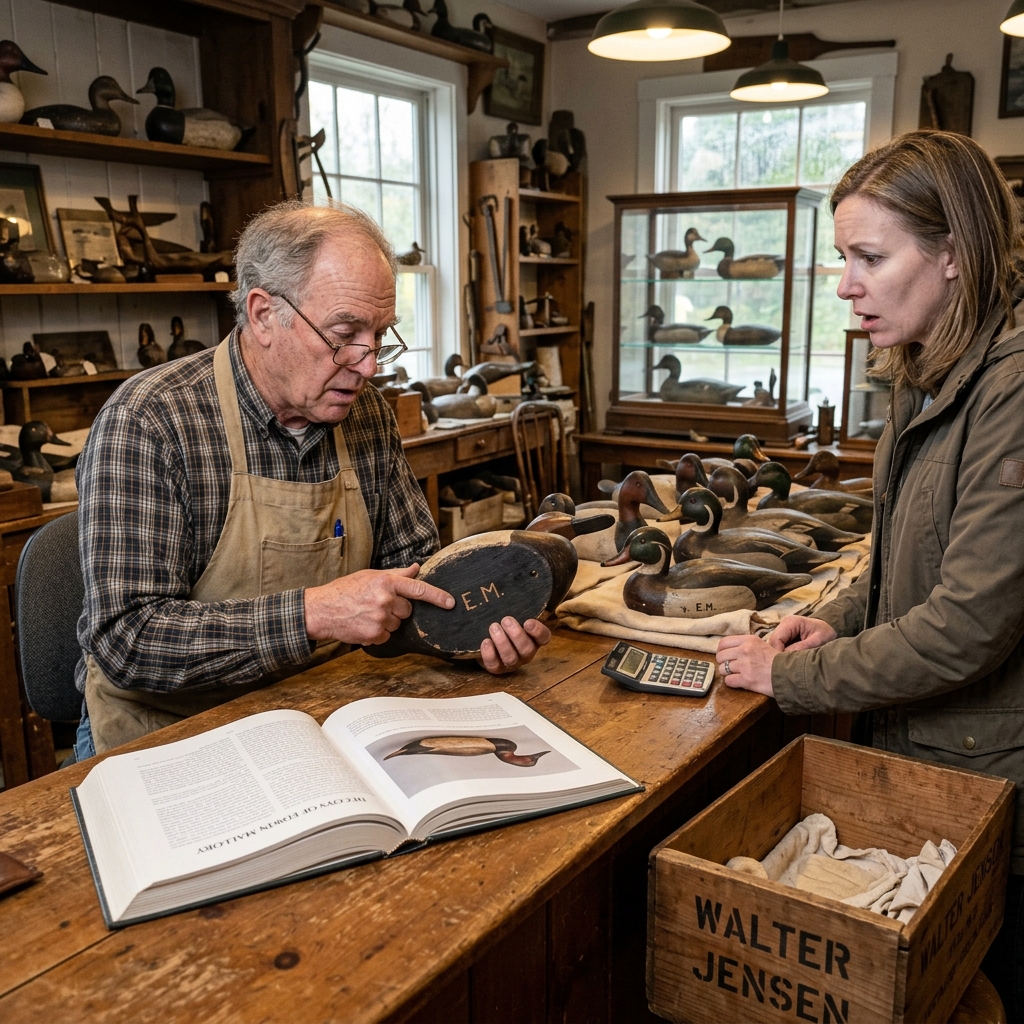
He carefully reached beneath the counter and pulled out a thick reference book filled with photographs of antique decoys.
He flipped through several pages before stopping.
“There.”
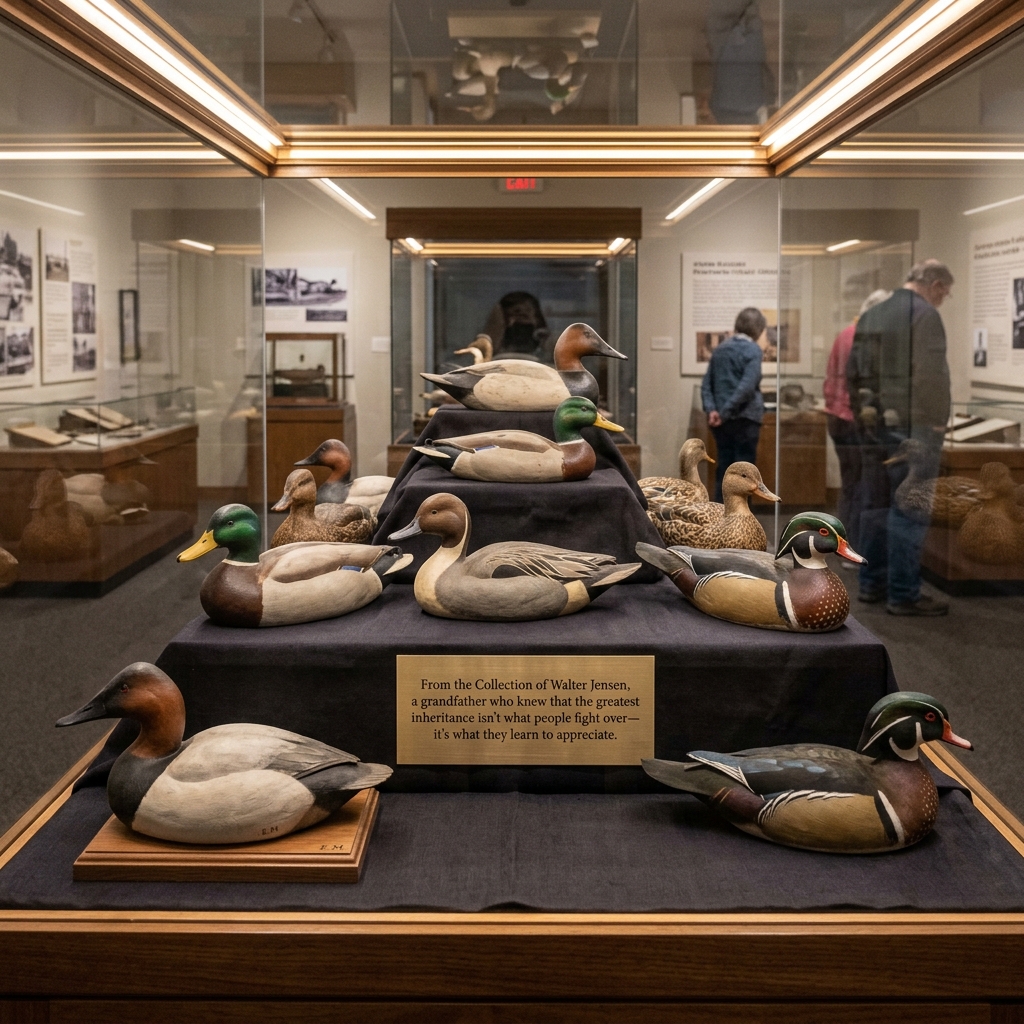
The picture looked almost identical to the duck resting in his hands.
“My grandfather carved birds while watching television,” I said with a nervous laugh. “He wasn’t famous.”
Halloran gently pointed to the initials burned into the base.
E.M.
“Edwin Mallory,” he whispered. “One of the greatest decoy carvers of the twentieth century. Authentic Mallory decoys are incredibly rare.”
I blinked.
“I think you’ve made a mistake.”
He slowly shook his head.
“I’ve been buying and restoring antique decoys for forty years. I know his work.”
My stomach fluttered.
“But my grandfather’s name was Walter.”
Halloran smiled.
“Exactly.”
He set the bird down as though it were made of glass.
“I don’t believe your grandfather carved these. I believe he owned them.”
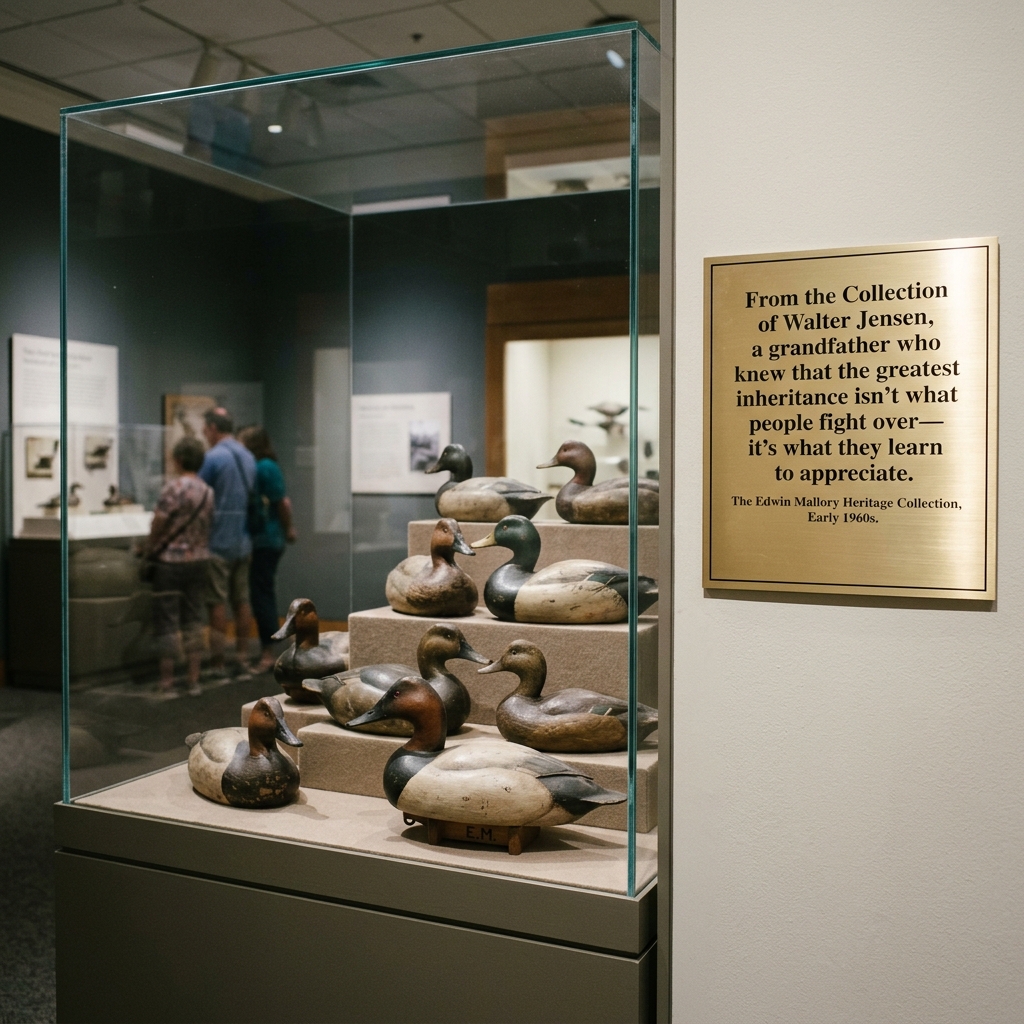
He explained that Edwin Mallory had carved only a small number of competition-grade decoys during the early 1960s. Most had disappeared into private collections decades ago.
Collectors had searched for the missingset for years.
“There were twelve.”
I froze.
“Twelve?”
Halloran nodded toward the wooden crate sitting beside my feet.
“You said there are twelve?”