“My son was taking me to Florida for my retirement, and at the airport, my 8-year-old granddaughter slipped a piece of paper into my hand: ‘run’. I faked a stomach ache and turned around to leave the airport.”
Stop playing games.
I read the text twice.
Then I swiped it away without responding.
Not because I lacked fear.
I was so terrified that my knees trembled beneath the linen trousers David had selected for the journey, as though even my wardrobe had to submit to him.
I hurried toward the taxi line, hugging my purse tightly against my chest.
Behind me, the terminal continued breathing with its chaotic symphony of rolling luggage, boarding calls, and tearful farewells, yet it felt as though every PA speaker was broadcasting my name.
“Margaret Hayes, return to your son.”
No one actually said it.
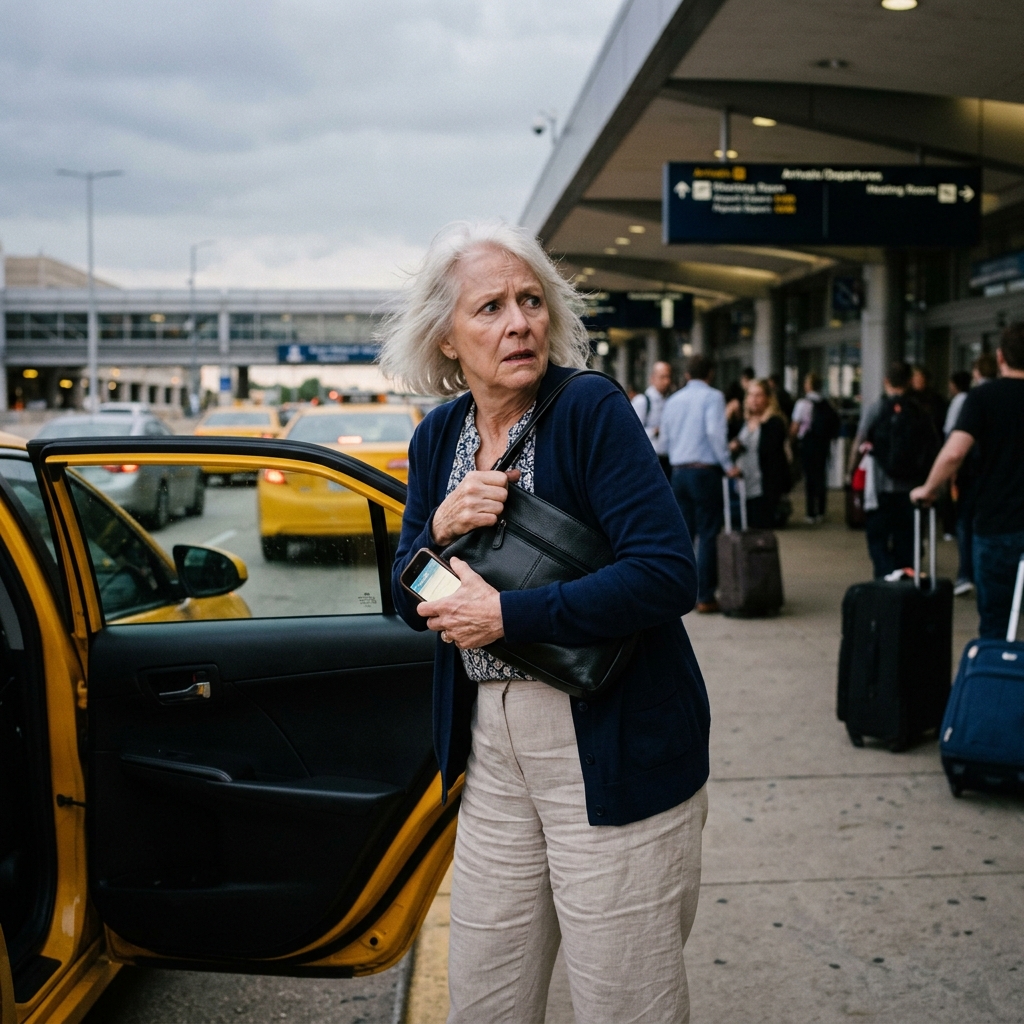
But my mind did.
My cell phone began to vibrate relentlessly.
David was calling.
Once.
Twice.
Three times in a row.
I ignored it.
I climbed into the back of the first available cab.
“Where to, ma’am?”
I opened my mouth.
I wasn’t entirely sure.
My home in Evanston supposedly wasn’t mine anymore, according to David.
He claimed it was “currently in escrow” and that was the reason I needed to head down to Florida while he wrapped up the paperwork.
But Chloe’s note read:
“look for the black square.”
The house.
The crossed-out window.
The dark square.
“Evanston,” I blurted out. “North Shore, near Sherman Avenue.”
The driver met my eyes in the rearview mirror.
“Looks like a storm is rolling in.”
I glanced up at the overcast Chicago sky.
“Then step on it.”
On the drive, David bombarded me with texts.
“Mom, this is absurd.”
“I’m alerting airport security.”
“Chloe is in tears because of you.”
That was the message that nearly made me order the driver to turn around.
Chloe.
My sweet girl.
My eight-year-old granddaughter, with her messy pigtails and her box of crayons, had risked so much to slip that note into my palm.
I could not let her down.
I dialed my next-door neighbor of thirty years, Barbara.
She picked up, sounding like I had woken her from a nap.
“Margaret, shouldn’t you be on a flight to Miami?”
“Barbara, please look at my property from your living room window. Is anybody over there?”
A brief silence followed.
Then the rustling of blinds.
“There’s a dark SUV parked on the curb. And a couple of guys at your front door.”
A chill crawled down my spine.
“Is it David?”
“No. Not him. Looks like they’re hauling out moving boxes.”
I squeezed my eyes shut.
The Evanston house.
The home where William and I had spent nearly four decades.
The place where David learned to balance on a two-wheeler in the driveway, where Chloe finger-painted her first masterpiece on the fridge, where I hoarded my late husband’s love notes inside an old shortbread tin.
“Barbara, get ahold of your nephew.”
“The cop?”
“No. The attorney.”
“Lord, what did you do, Margaret?”
I stared at Chloe’s crumpled warning in my lap.
“I think I finally opened my eyes.”
I didn’t head straight for the property.
About a mile out, I had the cabbie drop me at a retro diner off the main strip—one of those classic joints pouring black coffee and serving buttered toast around the clock.
I slid into a booth, asked for ice water, and phoned someone I hadn’t spoken to in over a decade: Rebecca Vance, William’s estate attorney.
Rebecca answered with her usual crisp tone.
“Mrs. Hayes.”
“My son is trying to relocate me to Florida against my wishes.”
She didn’t sound shocked.
Just instantly alert.
“Where are you currently?”
“At a diner. Downtown Evanston.”
“Do not approach the residence by yourself.”
“There are already movers clearing out my belongings.”
Rebecca exhaled sharply.
“Did you execute a power of attorney?”
I pictured the stack of documents.
David sitting across the kitchen island, sliding pages toward me with a pen.
“Mom, it’s just a bank formality.”
“Mom, this will simplify your tax returns.”
“Mom, don’t strain your eyes reading the fine print.”
“I did sign a few things,” I admitted.
“Notarized?”
“Yes.”
“Did you fully comprehend what you were signing?”
A wave of humiliation washed over me.
A searing, bitter shame.
I, the woman who had budgeted our household for decades, who had nursed a dying William, who had diligently managed mortgages, tuition, and medical bills, now had to confess that my only child had tricked me into signing away my life.
“No,” I whispered.
Rebecca didn’t lecture me.
That grace saved my sanity.
“I’m heading your way now. Stay put. And disable your phone’s location services.”
I had no idea how to do that.
A college student in the adjacent booth, who had clearly eavesdropped on my distress, slid over.
“Need a hand?”
She looked about twenty, sporting purple-streaked hair and a delicate nose ring.
“My son is tracking my whereabouts,” I confessed, feeling utterly ridiculous.
She didn’t crack a smile.
She gently took the device, tapped into the settings, and systematically disabled the GPS, location sharing, and permissions.
“All set. Also, we need to delete this.”
She pointed to an app with a harmless title: “Kinsafe Guard.”
I had never downloaded it.
David had.
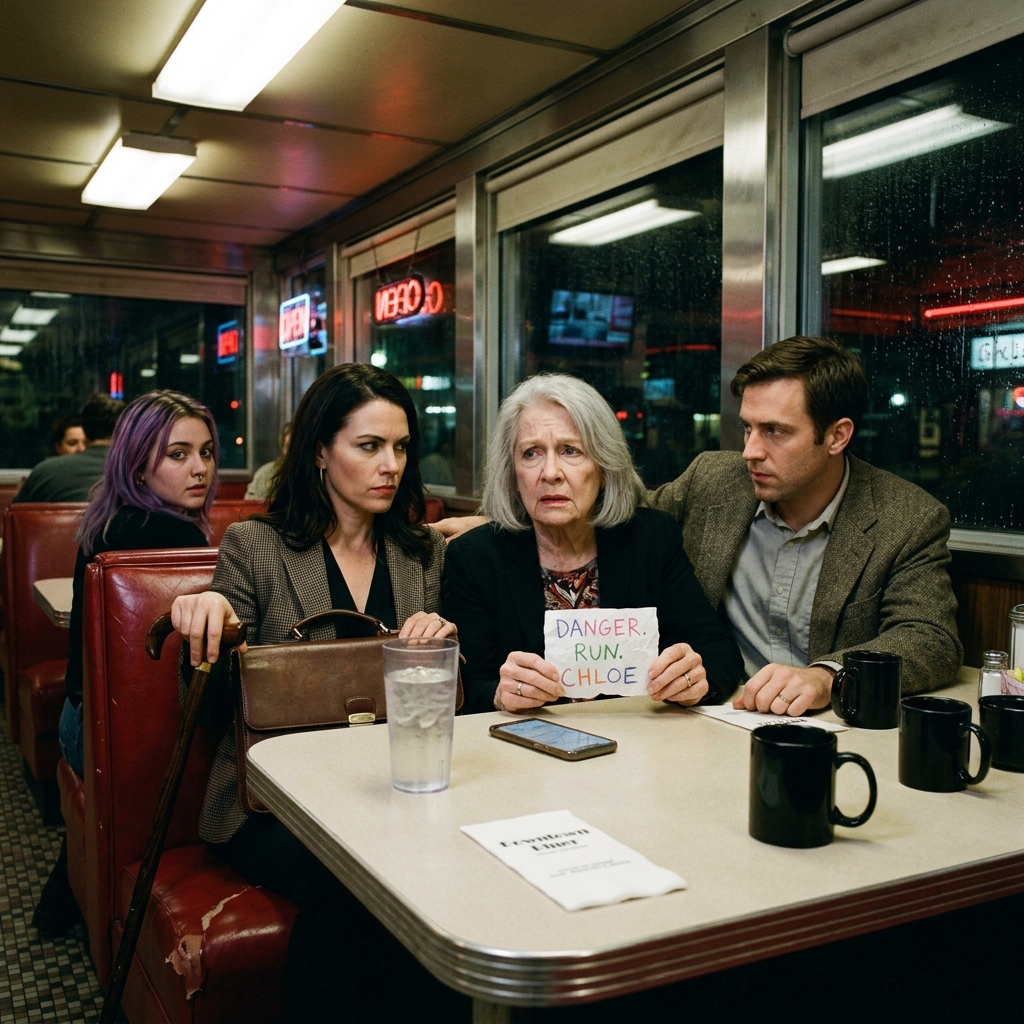
The girl slid the phone across the table.
“Don’t pick up his calls. Force him to text you. It creates a paper trail.”
I offered a choked whisper of thanks.
She gave my hand a reassuring squeeze.
“My nana dealt with a similar nightmare. Please don’t face him without backup.”
Rebecca pulled up twenty minutes later, armed with a leather briefcase, designer shades, and a fiercely determined expression.
She heard my story.
She inspected Chloe’s note.
She reviewed David’s aggressive texts.
Then she declared:
“We are walking into your home, and we’re bringing witnesses.”
“What if those movers are dangerous?”
“Which is exactly why we aren’t going solo.”
Barbara’s nephew arrived moments later.
His name was George; he was a former public defender who relied on a walking cane, but his gaze was as sharp as an eagle’s.
“The Elder Justice Act has real teeth when victims are brave enough to invoke it,” he told me directly. “Your son has zero legal authority to ship you across state lines or liquidate your assets against your will.”
“But my signatures are on those papers.”
“Fraudulent consent is easily contested in court.”
We drove to the neighborhood in separate vehicles.
Barbara was pacing her driveway, still wearing curlers and clutching her cell phone.
Seeing me, she rushed over and hugged me tight enough to crack a rib.
“I knew that boy was up to no good.”
My front door was propped wide open.
Two men were aggressively tossing taped boxes into a rented moving truck.
One of them claimed they had a signed work order.
Rebecca flashed her state bar card and delivered a warning with ice-cold precision.
“Not another item leaves this property until you provide your corporate ID and a verified contract.”
The mover froze.
George already had his smartphone out, recording the exchange.
I stepped over the threshold.
The interior smelled of disturbed dust, cheap cardboard, and profound betrayal.
The living room had been gutted.
William’s vintage encyclopedias were crated up.
The framed landscapes were stripped from the drywall.
My antique sewing machine was mummified in bubble wrap.
Resting on the mahogany dining table was a stack of legal forms and a thick red folder.
Rebecca flipped it open.
Her jaw tightened.
“Margaret, this is a durable, general power of attorney. It covers asset liquidation, real estate transactions, full financial control, healthcare proxy, and out-of-state residential placement.”
“Placement?”
“Correct. Miami wasn’t going to be a holiday.”
I collapsed into a chair as the room spun.
“Where was he planning to put me?”
George answered with a heavy sigh:
“Out of sight, Mrs. Hayes. Permanently out of sight.”
Then it clicked.
The drawing.
The black square.
I hurried down the central hallway.
The window with the “X” that Chloe obsessively sketched matched the one in my craft room, situated at the rear of the house near the utility closet.
We mostly used it for storage after William passed.
David had been nagging me to demolish that wing to “boost the property value.”
I pushed the door open.
It was cluttered with packed cartons, drop cloths, a step ladder, and buckets of primer.
I scanned the space for a dark square.
I checked the drywall.
The hardwood.
The closet door.
Nothing stood out.
My cell buzzed.
A text from David:
I know you’re at the house. Do not make this harder than it has to be.
I handed the screen to Rebecca.
“Screenshot that,” she instructed. “Every threat builds our case.”
I swept my eyes over the room one more time.
And then, I spotted it.
Tucked just above the floor trim, concealed behind a stack of spare ceramic tiles, sat a modest black panel.
It wasn’t an electrical outlet.
It was a flush metal plate coated to blend with the baseboards.
I dropped to my knees and traced its edges.
It was sealed shut.
George hobbled over.
“Looks like a concealed wall safe.”
“William never mentioned a—”
I cut myself off.
He had mentioned it.
A few years back, when his memory first began to slip, William brought me into this exact room and muttered:
“If David ever loses his way, look for the black square.”
I always assumed he meant a modern art piece I had misplaced.
A canvas.
A square.
Painted black.
My late husband had engineered a failsafe, and my brilliant eight-year-old granddaughter had decoded it.
Rebecca ran her hand under the wooden shelving unit and peeled off a tiny key secured with dried-out duct tape.
The metal plate popped open with a satisfying click.
Nestled inside was a heavy steel lockbox.
And within that box lay my actual life, fiercely guarded from my own child.
Romantic letters from William.
Certified property deeds.
A superseding will.
A USB flash drive.
Offshore banking ledgers.
And a piece of stationary bearing William’s trembling cursive:
“Margaret, if you are reading this, David is attempting to do to you what he tried to do to me. Refuse to sign anything. The estate must not be liquidated. There is an untouchable trust in your name. And I have left the proof.”
I couldn’t finish the paragraph.
I clamped a hand over my mouth and sobbed right there on the dusty floorboards, while Barbara murmured protective prayers from the doorway.
Rebecca extracted the flash drive.
“We need to plug this in right now.”
We booted up William’s clunky desktop.
The primary folder was simply titled:
“DAVID.”
It contained dozens of audio files.
In one crystal-clear recording, David was pacing on our back deck, barking into his phone.
“Once the old lady signs the proxy, I’m shipping her down to the Naples facility near Rachel. She’s never coming back north. Then we flip the Evanston property and wash our hands of it.”
Rachel.
My daughter-in-law.
Chloe’s mother.
David had sworn she was living her best life working a corporate job down in Florida.
He claimed Chloe was staying with him “temporarily” in Chicago because Rachel’s travel schedule was too hectic.
The next audio clip chilled my blood.
Rachel was weeping hysterically.
“David, please, you can’t strip my baby away from me.”
His voice was deadpan:
“Then sign the custody amendment and quit whining. My mother is coming down, and she’ll convince Chloe this is normal. If you fight me, I’ll have you committed as legally unstable.”
Rachel wasn’t an absent mother.
She was a hostage to his blackmail.
Just as I was about to become.
“Chloe…” I gasped softly.
A violent pounding at the front door shattered the silence.
David stormed into the foyer like a hurricane.
He hadn’t come alone.
Flanking him was a slick man in a tailored suit and a second man clutching a black medical bag.
“Mom,” David said, forcing a tight, panicked smile when he noticed Rebecca and George. “Thank God you’re safe. I was worried sick.”
“Do not take another step toward me,” I commanded.
He froze in his tracks.
I hadn’t used that tone with him since he was a teenager.
“You’re clearly disoriented. That’s exactly why I brought Dr. Miller. We just need to check your vitals.”
Rebecca immediately stepped between us.
“Mrs. Hayes explicitly denies consent for any impromptu medical evaluations.”
David’s jaw muscle ticked.
“I am her flesh and blood.”
“And I am her retained legal counsel.”
The man in the suit cleared his throat:
“We have fully executed medical proxies.”
George tapped his cane against the floor and held up the steel lockbox.
“And we have a superseding trust that voids them entirely.”
David locked eyes on the box.
His polished facade cracked.
Just a fraction, but it was enough.
“Where the hell did you dig that up?”
“Where your father knew you wouldn’t bother to look,” I replied coldly. “In a part of this house you couldn’t monetize.”
He lunged forward.
“Hand it over, Mom.”
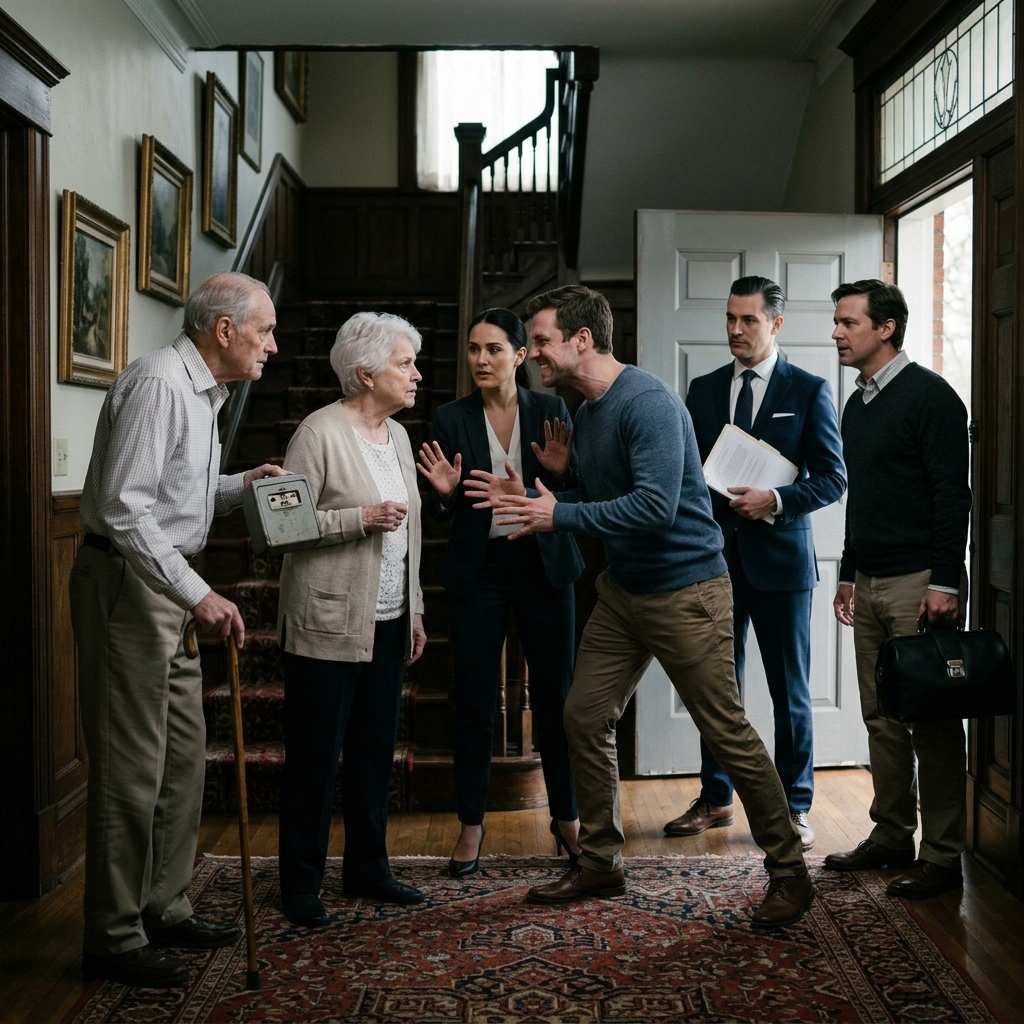
“Never.”
“You have no idea what you’re doing right now.”
“For the first time in nearly a year, I know exactly what I’m doing.”
The doctor attempted a soothing, clinical tone.
“Mrs. Hayes, severe anxiety can trigger paranoia. Your son is merely prioritizing your well-being.”
I shot him a withering glare.
“Doctor, if you genuinely care about my well-being, kindly ask this man why he was dragging me across state lines using forged consent forms and a GPS tracker secretly installed on my phone.”
The physician snapped his mouth shut.
David completely lost his temper.
“I organized all of this for your own good!”
Barbara let out a sharp, mocking cackle from the hallway.
“Oh, absolutely. It’s always ‘for the good of the sweet old lady’ sitting on a two-million-dollar piece of real estate.”
Rebecca had dialed 911 the moment the men entered.
When the Evanston police arrived, David effortlessly slipped his concerned-son mask back on.
He smooth-talked the officers about my advanced age.
My prolonged widow’s grief.
My cognitive “decline.”
My tragic episodes of dementia.
Watching him perform, my stomach dropped.
For a fleeting second, the gaslighting worked, and I began to doubt my own sanity.
Then Chloe materialized on the front porch.
I have no idea how she managed the logistics.
Rachel had brought her.
My daughter-in-law looked frail, carrying heavy, dark bags under her eyes, gripping a manila envelope tight to her chest.
Chloe sprinted across the foyer.
“Nana!”
I dropped to the floor and squeezed her tight enough to fuse our ribs together.
All the color drained from David’s face.
“Rachel, what the hell are you doing in Illinois?”
She raised the envelope like a shield.
“Exactly what your mother is doing. I stopped following your orders.”
Chloe pointed a tiny finger at her father.
“He told his lawyer that Nana was going to a facility where the phones didn’t work. I heard him.”
David roared:
“Chloe! Shut your mouth!”
The little girl flinched and ducked behind my legs, but she stood her ground.
“He also said if Mommy tried to come get me, he’d tell the judge she was insane.”
Rachel silently passed her envelope to Rebecca.
Printouts of abusive texts.
USB drives of screaming voicemails.
Coerced bank wire receipts.
The drafted listing agreement for my home.
A petition for my involuntary psychiatric hold.
An identical petition weaponized against Rachel.
Two women separated by thirty years, both branded with the exact same lethal label:
Unstable.
The police officers didn’t slap handcuffs on David that afternoon.
Not the cinematic perp-walk I desperately craved.
The real justice system doesn’t move as fast as human heartbreak.
However, an official report was filed.
A permanent paper trail was established.
The illegal eviction was immediately halted.
Rebecca filed emergency injunctions blocking any sale of my property or tampering with my medical rights.
The shady doctor and the slick lawyer were forced to surrender their IDs to the cops.
The movers abandoned the boxes on the lawn.
And David was escorted off my property without so much as a family photo album.
Before stepping onto the sidewalk, he shot me a venomous look.
“You’re going to deeply regret doing this, Mom.”
I squeezed Chloe’s little hand.
“No. The only thing I regret is not doing it sooner.”
The ensuing months were an exhausting legal battlefield.
The fraudulent power of attorney was officially revoked.
The corrupt notary was dragged before a licensing board for failing to verify my consent.
The secret trust fund William had established provided the capital I needed to hire elite litigators, change my locks, and restore my home.
The FBI launched an inquiry into the wire transfers David had authorized.
Simultaneously, Rachel filed an aggressive petition to restore her full custody of Chloe.
David loudly proclaimed that we had all betrayed him.
It was his favorite narrative.
As though uncovering the truth is an act of treason the moment it stops benefiting the liar.
He showed up at my porch weeping apologies.
I refused to open the door.
He sent lavish bouquets.
I tossed them in the trash.
He even dispatched a family pastor to preach the virtues of Christian forgiveness.
I looked the minister dead in the eye and said:
“Forgiving a thief doesn’t mean you hand him the keys to the vault.”
The pastor never came knocking again.
Chloe lived with Rachel and me for several weeks until the family court established a concrete protection order.
Many nights, she would wake up from nightmares and crawl under my quilt.
“Were you going to disappear forever, Nana?”
“Never, sweetie.”
“But Dad said once you were down there, nobody would ever believe a word you said.”
I gently brushed the hair from her forehead.
“And that is exactly why you gave me the warning.”
“I was so scared.”
“I was terrified, too.”
“Was I a bad girl for telling?”
I pulled her against my chest.
“You’re a hero. You saved my life.”
She wept quietly into my shoulder.
She was only eight years old, yet she already understood that grown-ups could dress a prison up and call it love.
That was the deepest wound of all.
It wasn’t the stolen money.
It wasn’t the hijacked real estate.
It wasn’t the legal papers.
It was the crushing reality that my tiny granddaughter had to act as a smoke detector because the adults around her had fallen asleep at the wheel.
Rachel and I spent hours talking over the kitchen island.
It was profoundly awkward at first.
I had failed her, too, after all.
I had swallowed David’s lies when he labeled her “hysterical.”
I assumed she was just being dramatic.
I bought into the sexist myth that a mother wouldn’t lose custody unless she had done something horrific.
The guilt was suffocating.
“Please forgive me,” I begged her one Sunday while brewing a pot of coffee.
Rachel stayed quiet for a long moment.
“I honestly thought you were in on his plan.”
“I was blindly loyal to my son, and I refused to look at the bodies he was stepping over to get his way.”
She stared down at her mug.
“He weaponizes that, you know. The fact that we’re hardwired to love him.”
It was the brutal truth.
David used familial love as a skeleton key.
To manipulate me.
To break Rachel.
To silence Chloe.
To exploit William’s hard-earned legacy.
The Evanston house never went on the market.
Instead, we repainted the interior.
Not to erase the bad memories, but to reclaim the space.
The craft room was officially mine once more.
I unpacked the cartons, scrubbed the pine floors, and positioned my sewing table directly beneath the window.
On the lower wall, I left the black metal plate completely exposed, refusing to hide it.
Chloe decorated the perimeter with purple glitter stickers.
“Just so it doesn’t look so spooky anymore,” she beamed.
I didn’t sell the property, but I executed a maneuver David never saw coming.
I locked the entire estate down in an ironclad legal trust.
It featured a life estate clause, an updated will, rigorous medical directives, appointed third-party fiduciaries, and one glaringly specific stipulation: no blood relative could make a single decision on my behalf without a verified judicial review and my own appointed counsel present in the room.
Rebecca smiled warmly as I initialed the final page.
“You’re bulletproof now, Mrs. Hayes. Your legacy has a deadbolt on it.”
David was buried in legal warfare.
He avoided immediate jail time—white-collar fraud rarely results in swift orange jumpsuits—but the civil suits bankrupted him while the criminal probes loomed over his head.
He was stripped of all access to my finances, banished from the property, and lost all parental leverage over Chloe.
Rachel rebuilt her career and her peace of mind.
I reclaimed the sacred right to say “no” without offering an apology.
A year into the fallout, David mailed me a handwritten letter.
He whined about mounting legal debts.
He claimed he was under immense pressure.
He swore he never intended to cause me pain, insisting that Florida would have been “a tropical paradise.”
But he conveniently ignored the only question I had Rebecca relay to him:
“If your intentions were so pure, why did my granddaughter have to slip me a note telling me to run?”
Because there is no innocent answer to that.
Today, I’m still thriving in Evanston.
On warm mornings, I stroll down to the farmer’s market, pick up an almond croissant, heirloom tomatoes, fresh basil, and extravagant bouquets I definitely don’t need.
On weekends, I sit on the park benches near the lake, sip my coffee, watch the joggers go by, and inevitably think back to that crowded airport terminal.
To my tightly clenched fist.
To the single imperative scribbled in purple crayon.
RUN.
One tiny syllable.
A child’s desperate command.
An escape hatch.
Chloe just celebrated her tenth birthday.
She no longer sketches houses with barred windows.
Now, she draws sprawling mansions with wide-open double doors, but she always includes a tiny black square somewhere on the page.
“Is that still where we hide the secrets?” I teased her recently.
“Nope,” she grinned. “Now it’s our emergency panic button.”
I burst out laughing.
And then I went to the kitchen and cried happy tears when her back was turned.
Rachel landed a great job in the city and swings by most afternoons, so the three of us share dinner a few nights a week.
Roast chicken, mashed potatoes, fresh greens, and homemade buttery biscuits when I really want to spoil my girls.
My house is filled with healthy noise again.
Not the sinister rustling of hidden contracts.
Not the muffled hum of deceitful phone calls.
It’s filled with the clatter of silverware, the groans of math homework, the blare of the television, and uninhibited laughter.
David is permanently banned from crossing the threshold.
He can draft all the letters he wants.
He can petition the courts.
He can plead his case to indifferent judges.
But the front door in Evanston no longer swings open for guilt trips.
That fateful morning at O’Hare, my son was supposedly flying me to a luxurious retirement in Florida.
That was his pitch, anyway.
The reality was much darker.
He was systematically amputating me from my community, draining my bank accounts, erasing my husband’s legacy, and revoking my bodily autonomy, all to reduce me to a compliant signature fading away on the other side of the country.
But then my incredibly brave eight-year-old granddaughter slipped a crumpled note into my palm.
“RUN.”
So, I faked a bout of nausea.
I walked out of that terminal.
I went home and searched for the black square.
And what I unearthed was far more valuable than legal paperwork.
I discovered my late husband’s final act of devotion.
I witnessed my granddaughter’s breathtaking courage.
I learned Rachel’s heartbreaking truth.
I saw my son’s true, unmasked face.
And most importantly, I found a version of myself I assumed had withered away with age: a woman capable of straightening her spine, clenching her fist, marching through those sliding glass doors, and fiercely claiming her own life before someone else could file her away in a filing cabinet.
People occasionally ask if it broke my heart to call the cops on my own child.
Of course it did.
It’s the kind of agonizing grief you never fully get over; you simply learn to carry it.
But I know with absolute certainty that it would have destroyed me to board that airplane, gaze out the oval window, and realize far too late that I wasn’t flying toward a sunny retirement.
I was flying into total erasure.
That’s exactly why I preserve Chloe’s torn piece of paper inside a velvet-lined jewelry box on my dresser.
It rests right beside William’s love letters, the tiny key to the wall safe, and the first draft of my new, impenetrable will.
Every so often, I lift the lid, unfold the crease, and trace the shaky letters.
RUN.
I no longer view it as a symbol of panic.
I view it as my family’s greatest inheritance.
Because that little girl taught me that a grandmother can absolutely be reborn at an airport exit, armed with nothing but a shattered heart, a piece of abandoned luggage, and one unshakeable truth:
If a relative carts you far away to “take care of you” but strips you of your right to choose, it isn’t compassion.
It is a hostage situation with a one-way boarding pass.
And I, Margaret Hayes, was not put on this earth to quietly disappear in the name of a son’s toxic love.