The telephone on the kitchen wall has this low, rattling hum whenever the line is patch-switched from the highway exchange, and on a Tuesday morning in November, that hum was the only warning I got before my entire life split down the middle. I was standing by the sink rinsing out a coffee mug when the voice on the other end asked for me by my full maiden name, which I had not used since the preacher said amen back in the fall of 2018.
The man on the line talked fast like he was reading off a ledger while standing in a freezing hallway. He said my name was tied to an overdue balance of two hundred ninety-three thousand dollars through a commercial lending outfit out in Reno. I told him he had the wrong person and that my husband Arthur handled the books for our feed store, but he just gave that dry, paper-shuffling sigh that people who collect bad debts seem to practice in their sleep.
“Mrs. Vance, your signature is right here on the line,” he said, his tone flat as an old shovel. “Seven separate draws since nineteen. You might want to pull your credit file before the end of the day.”
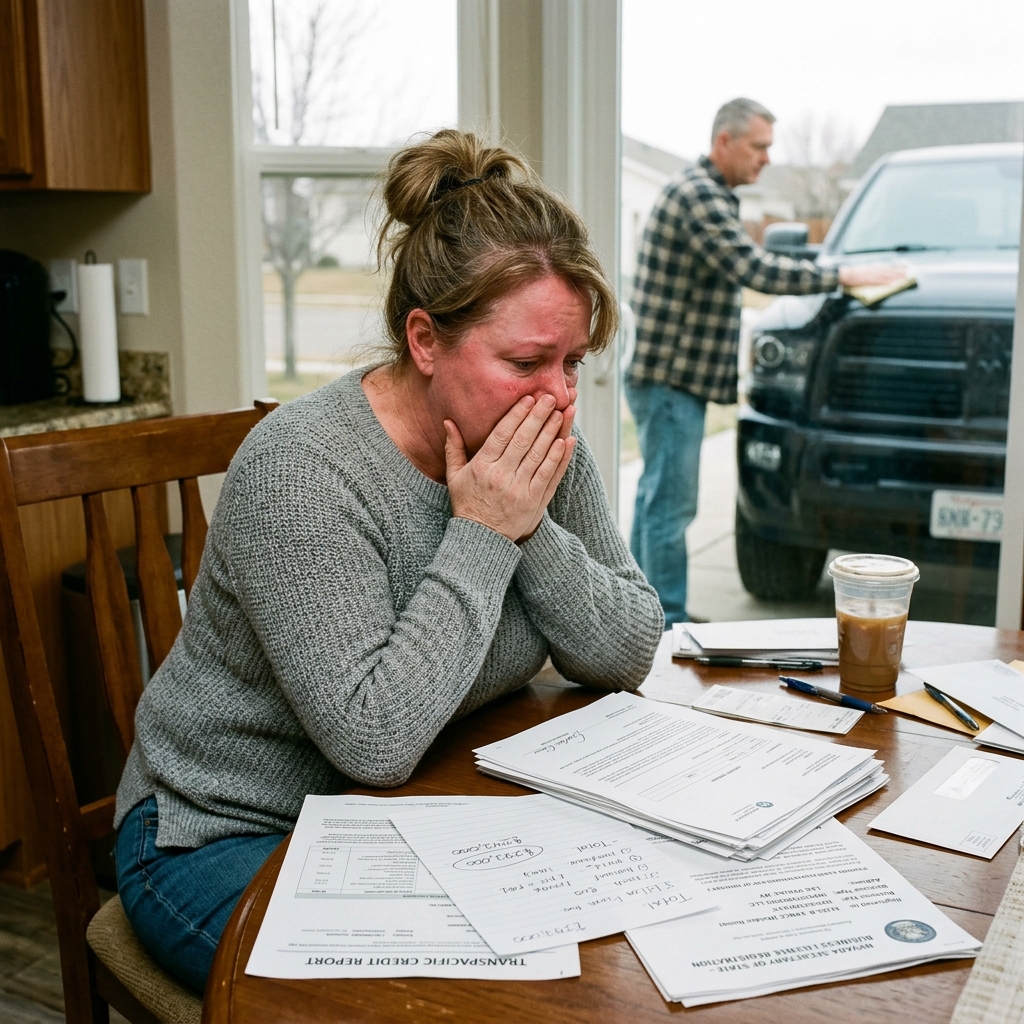
I hung up the phone and stood there listening to the dial tone pulse against my ear until the machine clicked it dead. My hands felt cold, the kind of deep winter chill that gets into your bones when the wood stove goes out overnight.
I walked over to the old desktop computer in the corner of the parlor, the one that makes that high whining noise every time you boot it up, and typed in the security questions for our main banking portal.
The screen flickered twice before showing me a neat, descending list of numbers that made my throat tighten up. Seven loans. Seven separate promissory notes logged between the autumn of 2019 and the middle of last month. Each one carried my full legal signature, written in that steady, looping hand I had practiced back in high school geography class. Except I had not held a fountain pen to any of those pages. The loops were just a hair too wide, the crossing of the T just a fraction too high.
I sat there for twenty minutes staring at the monitor while the sunlight moved across the braided rug on the floor.
I thought about the winter of 2020 when we had to put off fixing the back porch roof because Arthur said cash was tight. I thought about the way he always brought the mail in from the roadside box every single afternoon, sorting through the circulars before I even took off my coat.
The front screen door banged shut, and I heard Arthur boots hitting the linoleum in the mudroom. He was humming some old country tune, the kind of cheerful noise he made whenever he felt like he had outsmarted somebody at the cattle auction. I stood up from the desk, my knees feeling stiff and hollow, and walked out to the driveway where he was spending his afternoon polishing the fenders of our black Dodge truck with a yellow rag.
Arthur did not even look up when my shadow fell across the gravel. He just kept working that circular motion with his hand, rubbing wax into the chrome until you could see the reflection of the bare elm trees overhead.
I reached out and tapped the flat of my hand against the truck door, right above the side mirror.
“Arthur, the bank called me this morning,” I said, my voice sounding smaller than I wanted it to. “They said we owe nearly three hundred thousand dollars on seven different loans with my name on them.”
He paused the rag for half a second, his shoulder blades bunching under his flannel shirt, before he went right back to rubbing the wax. “They’re just investments, Roxanne,” he said, his voice as calm as if we were talking about the weather forecast for the weekend. “You know how these commercial lines work. Paperwork gets messy.”
Something about the way he said it, so smooth and without a single flicker of surprise, made the hair on the back of my neck stand up straight. He did not ask which bank. He did not ask who called. He just had his answer ready in his pocket before I even finished the sentence.
“Investments in what, Arthur?” I asked. “We don’t own anything in Nevada.”
He finally straightened up, wiping his forehead with the back of a calloused wrist, and gave me that slow, reassuring smile he had used to charm half the county into voting for him when he ran for the co-op board back in twenty-two. “You worry too much about the ledger, honey. Let me handle the heavy lifting.”
I did not say another word to him. I turned around and walked straight back inside the house, locking the back door behind me with a solid click. I did not go back to the computer, and I did not wait for him to come in for supper. I picked up my phone and dialed the number for the federal field office two counties over, the one my brother had pinned to the refrigerator after he retired from the state police.
Three days later, Special Agent Miller sat across from me at our scarred oak kitchen table. He was a tall man with very short gray hair and a navy blue blazer that looked like it had never seen a speck of dust in its life. He had a thick manila folder open between us, the pages clipped together with heavy metal fasteners that gleamed under the overhead pendant light.
“Mrs. Vance, your husband is thorough,” Agent Miller said, tapping a finger against a certified copy of a bank transfer slip. “I’ll give him that. He didn’t just borrow against your personal credit. He set up a corporate entity in Storey County, Nevada, back when the pandemic restrictions first started lifting.”
I sat with my hands folded in my lap, watching the dust motes drift through the beam of light coming through the window. “What kind of business?”
“That’s the interesting part,” Agent Miller said, turning a page to reveal a state registration document with a raised golden seal in the corner. “According to the state filings, the enterprise is registered as a wholesale timber and freight broker. But when we pulled the wire transcripts for the last four years, not a single dollar of that two hundred ninety-three thousand went toward lumber or shipping.”
He paused, adjusting his glasses with two fingers, and looked me straight in the eye with a gaze that felt heavy and tired.
“The business license was filed under your maiden name,” Agent Miller continued, his voice dropping an octave. “You were listed as the sole proprietor, meaning every liability falls directly on your personal estate if things go sideways.”
I felt the room tilt just a fraction, the way it does when you stand up too fast after a long flu. “I never signed a paper for a timber broker in Nevada. I have never even been west of Denver.”
Agent Miller closed the folder with a soft, dull slap that seemed to echo off the plaster walls. He leaned forward across the oak table, resting his forearms on the wood, and delivered the final blow without raising his voice at all.
“I know you didn’t, Mrs. Vance,” he said quietly. “Because the woman running that business office out in Reno isn’t you, and she certainly isn’t your sister.”
He slid a glossy 8-by-10 photograph across the table toward my coffee cup. It was a digital still taken from a security camera mounted above the entrance of a small brick office park in the desert heat. A woman with bright blonde hair cut into a sharp bob was walking through the glass doors, carrying a leather briefcase in one hand and wearing a silver charm bracelet that caught the afternoon glare.
I knew that bracelet immediately because I had picked it out of the display case at the jewelry store in town six years ago for Arthur’s younger sister, Clara, right before she moved out to the coast to live with her second husband.
“She’s been using a duplicate driver’s license with your birth date and her own photograph for nearly five years,” Agent Miller said, watching my face settle into that cold, hard stillness that runs in my family whenever the ground gives way beneath us. “And she’s listed as the primary beneficiary on all seven of those commercial notes.”
I looked down at the photograph for a long time, listening to the old kitchen clock ticking away against the wall, measuring out the seconds until Arthur’s truck engine would shut off out in the gravel drive.