
I had been letting my sister Clara, her husband Vince, and their teenage son Leo live in my house rent-free for eight months when Clara sent me another grocery list on a cold, rainy evening. I had spent years believing that helping family meant never keeping score, but that night I finally understood how badly I had confused love with obligation. I stopped at the store after work, bought everything they requested, and carried two heavy bags toward my dark porch. Through the living-room window, I could see Clara curled beneath my blanket, Vince stretched across my sofa, and Leo sitting comfortably on the floor.
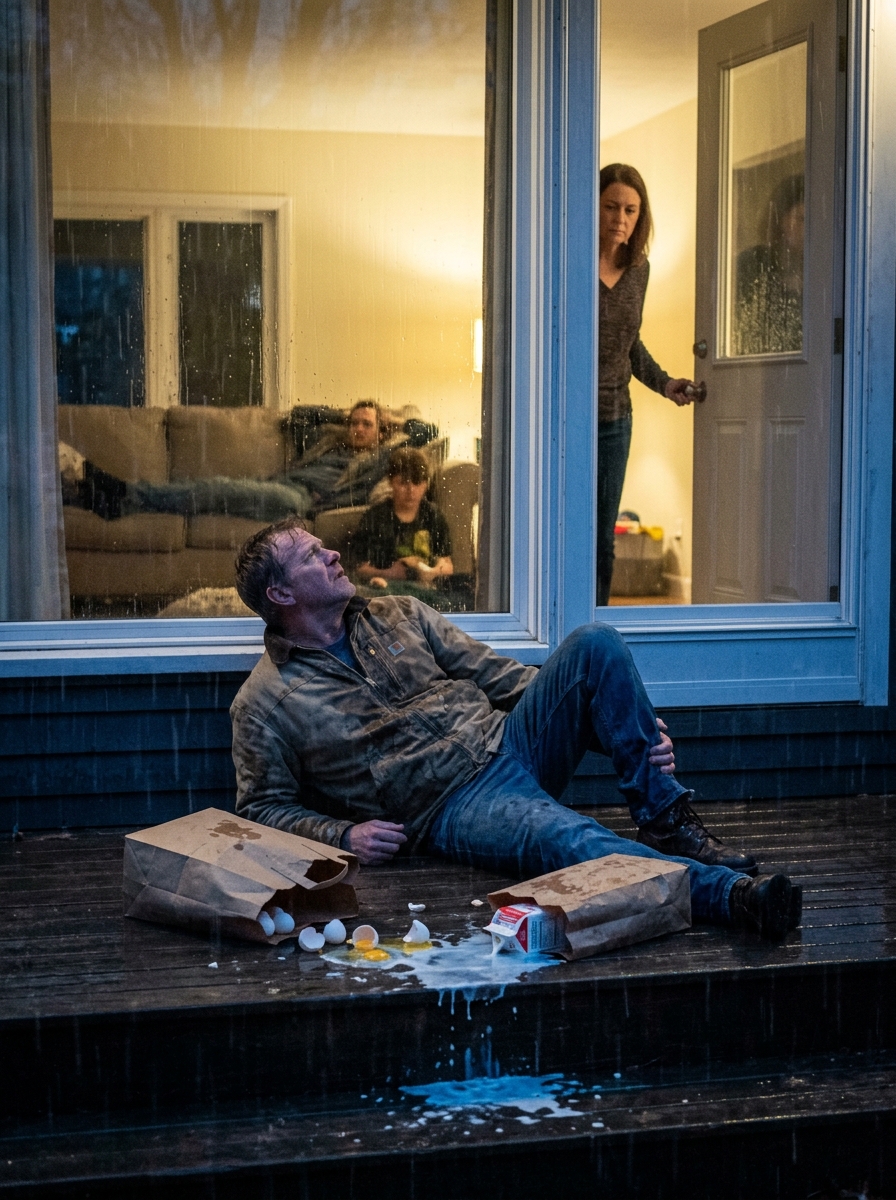
All three saw me arrive. None of them came outside. I stepped onto the porch, trying to avoid Vince’s boots near the door, and my foot landed on wet leaves. My ankle twisted violently beneath me. The grocery bags flew from my hands, eggs shattered across the porch, and the milk carton burst against the steps. Then came the crack. Pain exploded through my leg, leaving me gasping against the wet wooden boards. I looked through the window and saw Clara staring directly at me. I screamed her name. She finally opened the door a few inches. “I fell,” I told her.
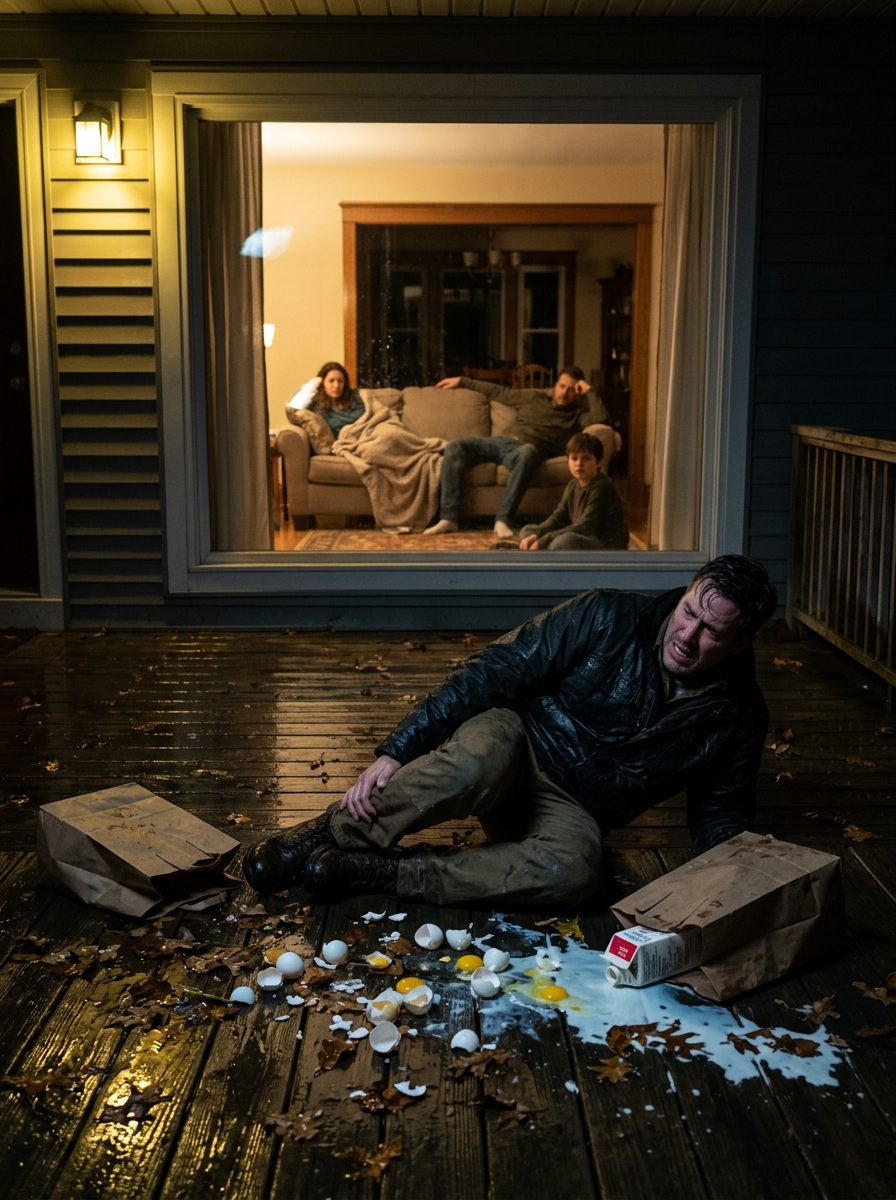
“I think my ankle is broken. Please call an ambulance.” She crossed her arms and sighed. “We are not your servants, Arthur.” Then she closed the door. I heard the lock click.
That tiny sound broke something inside me that months of resentment never had. I had carried Clara home when she fell off her bicycle as a child. I had paid bills when she was struggling. I had opened my home when she, Vince, and Leo had nowhere to go.
But now I was lying outside in the rain, injured, while the people living under my roof refused to help. I stopped calling their names and shouted for my neighbor Marcus instead. He ran over, found my phone, and called 911. When the paramedics arrived, they confirmed that my ankle was badly fractured. Marcus stayed with me at the hospital while my family stayed home. The doctor told me I would need weeks of recovery and possibly surgery.
Lying there under fluorescent lights, I realized the problem had never been the money. It was the fact that I had spent eight months allowing people to believe that my
kindness was an endless resource.
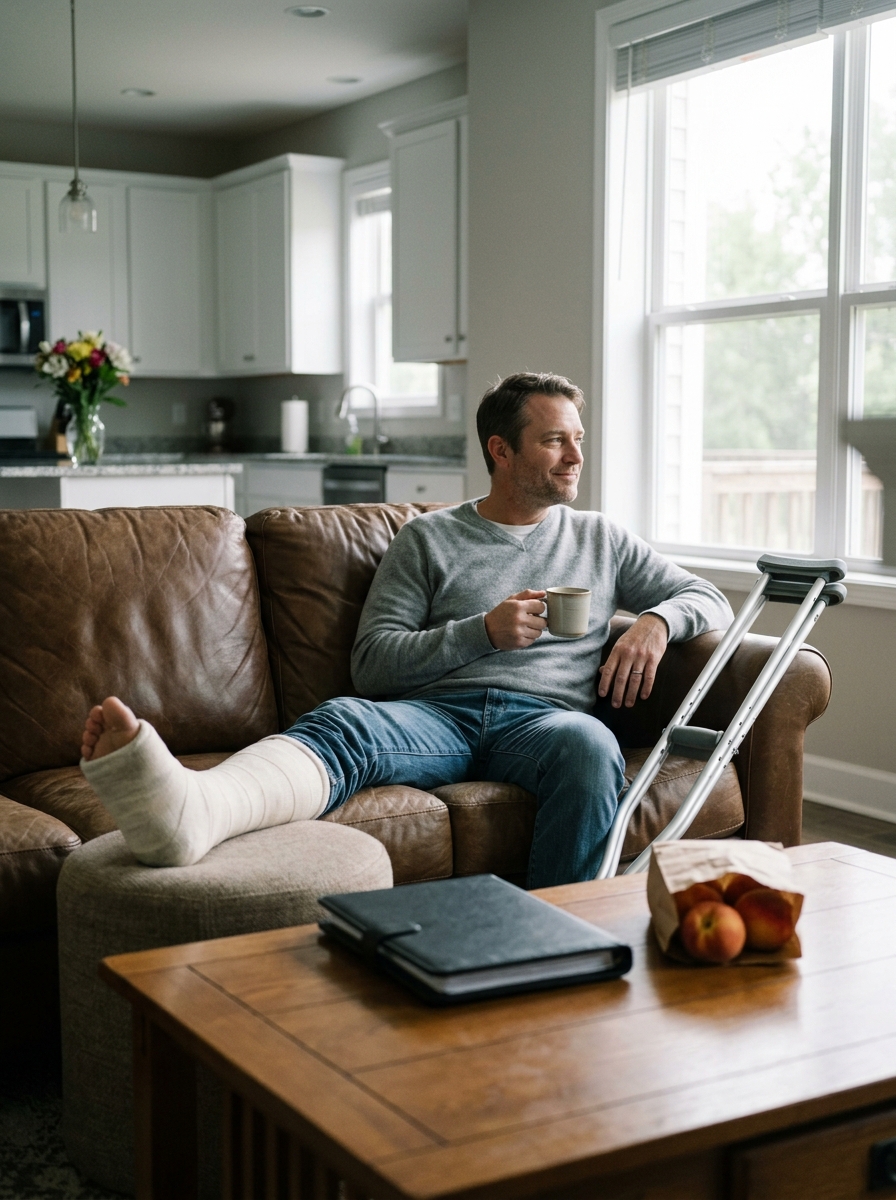
While Marcus drove me home the next morning, I called my attorney, Harper Ellis. “Bring the black folder,” I told her. “It’s time.” When I arrived, Clara was standing in the kitchen wearing my robe, Vince was drinking coffee from my favorite mug, and Leo was eating cereal. Clara looked at my cast and said, “We need to talk about last night.” I opened the Notes app on my phone instead. For months, I had quietly recorded every expense: rent, groceries, utilities, car insurance, repairs, and purchases they had made with my money. The total had passed $6,700. “You want to know what I learned?” I asked. “Helping family doesn’t mean allowing them to use you.” Clara accused me of keeping score. I looked at her and said, “No. Disgusting was watching me lie outside with a broken ankle while you ate the food I had just bought for you.”
When Harper arrived, she laid out the truth in legal terms. The house was mine.
They had no ownership interest and no lease. They had been living there only because I had allowed them to. They were given thirty days to leave. Clara cried. Vince
became angry. They accused me of abandoning family, but I finallyrefused to let guilt control me. My mother initially called and demanded to know how I could put my sister on the street. Then I told her what had happened. I sent her the hospital report, photographs of the broken groceries, the messages Clara had sent me, and the list of expenses. When she learned that Clara had watched me fall and refused to help, her attitude changed completely. “You left your brother outside with a broken bone?” she asked Clara. Clara had no answer.
During those thirty days, something unexpected happened. Leo began changing. He started helping around the house. He washed his own dishes, took out the trash, and one afternoon carried water upstairs for me because I was struggling with my crutches. I asked him why he had stayed inside that night. He admitted his father had told him I was probably trying to make everyone feel guilty. “I thought you looked hurt,” he whispered. “Then why didn’t you come outside?” I asked. His eyes filled with tears. “I didn’t want them to get mad at me.” I told him something I hoped he would remember for the rest of his life. “When someone is lying on the ground, helping them isn’t taking sides. It’s being human.”
On the twenty-eighth day, Clara and her family finally moved out. She placed the keys on my kitchen table and looked at me with tears in her eyes. “I used you,” she admitted. “I was so afraid of losing everything that I started believing what belonged to you belonged to me too.” I told her that I had only wanted to help. She nodded. “I know. And I turned your help into something you owed me.” Leo hugged me before leaving and asked if he could still visit. “You can,” I told him. “But you knock first, wash your own dishes, and ask before taking anything.” He smiled. “Deal.” Vince left without saying goodbye.
When the door finally closed behind them, I sat alone in the living room. The house was quiet, but it did not immediately feel peaceful. The walls were marked, the furniture was worn, the pantry was nearly empty, and my ankle still throbbed. But slowly, the silence began to feel different. It was mine. Three months later, Clara returned carrying a small bag of peaches. She stood outside instead of walking in. “I’m not here to ask for anything,” she said. That was when I knew she had finally understood. She told me she and Vince had separated and that Leo was doing well. Then she apologized without excuses.
I invited her inside for coffee, but before she stepped through the doorway, I stopped her. “The house is not a shelter anymore.” She looked at me. “Then what is it?” I glanced around the clean living room and quiet kitchen. “It’s a home. Everyone who enters respects the person keeping the roof over it.” She nodded and wiped her shoes before coming inside. We didn’t pretend everything was repaired. We didn’t erase what happened. But for the first time in months, we sat together as brother and sister instead of provider and dependent.
My ankle still aches when rain is coming. Sometimes I stand beneath the porch light and remember the night I fell—the broken eggs, the spilled milk, and three faces watching me through the window. For a long time, I thought that was the night my family abandoned me. Now I see it differently. It was the night they showed me the truth clearly enough that I could finally stop looking away.
I had spent months believing that keeping my door open proved I was a good brother. Instead, I learned that boundaries do not make you cruel, and saying no does not mean you stopped loving someone. Helping someone should never require you to surrender your dignity, your peace, or your right to be treated with basic kindness. I had opened my home because I loved my sister, but love without boundaries had slowly turned into resentment, entitlement, and dependence.
The night I was left outside in the rain was painful, but it also gave me something I desperately needed: clarity. I stopped measuring my worth by how much I could provide for other people. I stopped believing that saying no made me selfish. And I stopped confusing being needed with being loved. My house is quiet now. It is not empty. It is filled with something I had forgotten how to recognize: peace.
And after everything I paid to reclaim it, peace is the one thing that gets to live here rent-free.